Tuesday, April 12, 2016

Comics Squad: Recess!


Holm, J. ( 2014). Comics Squad: Recess! NY: Random House

     Recess, the part of the school day that students (and teachers) desperately need! This collection of eight stories capture the joy of recess time with an assortment of humorous tales, both realistic and fantasy. Kids will love the fun, bright cover, the silly stories, and the whimsical illustrations. Whether readers know the characters from the authors' other works or are being introduced to them for the first time, they'll enjoy the silly stories about a well-loved childhood pastime. 
    

Textbook Assignment #5 - Evaluation Criteria

Theme - If reaching a reluctant reader is the goal, then a graphic novel about recess would be a smart choice. These eight stories, all centered around recess, make many kids’ favorite part of school even more fun with the addition of super heroes, pizza monsters, magical acorn aliens, and talking vegetables. Some adventures happen at recess while others simply occur while trying to get outside to play. All of them center around a student’s timeless desire for the recess bell to ring and offer a reprieve from the long school day. In a time of emphasis on the importance of recess, it reminds us adults of the value students place on this daily physical and social exercise.

Style - If the theme of Comics Squad: Recess is fun, then the same could be said for its style. The ten authors have collaborated to form a humourous look at the experience of recess. Some take a realistic look but most of the stories have a flair for fantasy. Each of the eight stories have their own unique style, some are just plain silly while others have a more mature voice with sarcastic humor. They share a similar color theme yet they vary in their structure of the graphic novel styling. Each are also uniquely illustrated to represent the tone of the comic and the individual illustrators’ sense of humor comes through in their style and artistry. 

Teaching Books link
http://www.teachingbooks.net/tb.cgi?tid=39427&a=1

Book Trailer
http://www.teachmentortexts.com/2014/08/comic-squad-recess.html#axzz43ylpU6xC


Friday, March 25, 2016

The Graveyard Book


Gaiman, N. (2008). The Graveyard Book.  NY: Harper Collins

     Nobody Owens is a strange kid, with a strange name, and a strange home. He lives in a graveyard with his adoptive parents, who happen to be ghosts and all of his playmates have been dead for over a hundred years. He survived an attack that took the lives of his parents and sister, which is terrifying way the story starts. Once his new home is established, the story takes a choppy turn and jumps years ahead at a time to see Bod at varying ages. He faces many dangers, mostly outside of the graveyard, but the murderous man Jack makes a reappearance and Bod must fight back this time. 

Textbook Assignment #5 - Evaluation Criteria

Style - Not surprisingly, the style of The Graveyard Book is dark, spooky and at times, creepy. Gaiman tells of a boy who escapes a murder only to grow up in a graveyard, raised by adoptive ghost parents. There are certainly some tense moments, starting with the murders at the beginning, followed by several close encounters with creatures, living and dead, that want to harm the boy, Bod. It would seem that Gaiman has an appreciation for all things related to death in his descriptions of the graveyard, the inclusion of the dance of the macabray, and in his development of the ghosts themselves. His lack of fear in his writing creates a relaxed portrayal of something that otherwise could be quite horrifying.  

Setting - With the majority of this book taking place in a graveyard, the reader might anticipate a very dark and creepy book. The irony is that the descriptions of the graveyard are serene and peaceful making it a believable home for the main character, Nobody Owens. The terrifying points in the plot take place when Bod leaves the cemetery. He encounters danger after passing the Ghoul Gate and again when he enters the pawn shop. Even when he chooses to attend school, his faces dangers he never faced in the graveyard. While in my opinion, the character development was a little flat, the scenic descriptions and references to historical events, including the death dates of the graveyard’s inhabitants, were vivid and made for interesting reading. 

Teaching Books link
http://www.teachingbooks.net/tb.cgi?tid=12845&a=1

Lesson Plans
http://www.bookrags.com/lessonplan/the-graveyard-book/#gsc.tab=0


Crenshaw


Applegate. K. (2015). Crenshaw. NY: Houghton Mifflin.

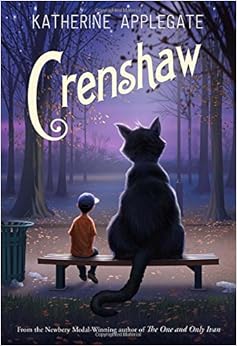
    Jackson is a smart kid and way too old for an imaginary friend. Unfortunately no one told his imaginary friend that and he keeps coming around, uninvited. Jackson's family is struggling financially and begin selling off their belongings in order to pay the bills.  In an effort to protect him, his parents aren't being straight with him and that is only perpetuating his fear of being homeless for a second time. Jackson could focus better on how to help his family if it weren't for the giant, imaginary cat, Crenshaw. Ultimately, it's Crenshaw's influence that gives Jackson the words to say in order to show his parents that he's not a little kid anymore, while offering the reader an intriguing glimpse into the world of imaginary friends.

Textbook Assignment #5 - Evaluation Criteria

Theme - Overall, there are two themes in Crenshaw, imaginary friends and homelessness. On the surface, it may seem these two subjects wouldn’t blend well, when in fact, Applegate does it seamlessly. Jackson is wise beyond his ten years and is not at all interested in hosting a giant, imaginary, talking cat named Crenshaw. What Jackson doesn’t realize is that it will be Crenshaw that helps him navigate the emotions and reality of his family potentially being homeless for a second time. Crenshaw, as Jackson’s subconscious, forces an honest conversation between Jackson and his parents which ultimately leads to a sense of peace and stability for the first time in many years.
Setting - The time period of Crenshaw is easy to distinguish as modern, with the mention of places like Target, Best Buy, and Starbucks. The idea of a child suffering because of his family’s financial situation however, is timeless.  The physical setting is significant to the main characters as they go from having a nice home to living in their car. Jackson struggles to make the situation manageable by using a box to create his own room in the backseat. Applegate paints a clear picture of the frustrations each family member felt during those fourteen weeks in the car. Once they are in their apartment, Jackson is grateful just to have walls and a bed. Gradually throughout the story, their physical surrounding changes as they begin to sell off their belongings in order to keep the apartment. By the end of the story, their physical address has changed once again but this time, it brings with it a sense of hope for an improved future.                     

Teaching Guide
http://images.macmillan.com/folio-assets/teachers-guides/9781250043238TG.pdf

Classroom Bookshelf - Great blog with book reviews, multi-leveled lesson ideas, connections with other books, and resource links
http://classroombookshelf.blogspot.com/2015/10/crenshaw.html


Skulduggery Pleasant


Landy, D. (2007). Skulduggery Pleasant. NY: HarperCollins.

    This isn't the usual novel that would typically find a spot on my nightstand, but I found it to be an interesting read with well-developed characters and a thorough, complete plot. Landy takes the reader into a world of magic and mystery that is unlike most fantasies. He successfully creates this world and its cast of characters and turns into a story with depth, charm, and adventure. It is easy to cheer for the two main characters who seek to avenge a loved one's death. What starts as a search for truth leads to a quest to save mankind from a power hungry monster. It concludes with a satisfying climax and resolution that opens itself to a sequel, or in this case, many sequels.


Textbook Assignment #5 - Evaluation Criteria

Characters - Skulduggery Pleasant’s main character, Stephanie, is a smart, tough, and bold girl who is thrust into a world of magic when her uncle suddenly passes away. She is soon surrounded by a cast of characters that are as unique as their names. The most interesting character, Skulduggery Pleasant, is a living skeleton with a quick wit, a passion for justice, and unmatched bravery. He serves as a constant source of amazement for Stephanie and the reader. Skulduggery takes Stephanie into a world of magic, mystery and danger and exposes her to people and creatures, both good and evil. Stephanie learns to trust Tanith Low, a tough woman who proves to be a brave and loyal fighter. Despite an awkward beginning, Stephanie relies upon Ghastly Bespoke and feels guilty that he goes to great lengths to protect her. Characters like Mr. Bliss and his sister China are a mystery to Stephanie and she is never quite sure she can trust them. Evil is clearly seen in the actions of Serpine and his influence over others makes for some unpredictable moments and plot twists.

Plot - Stephanie has just lost her uncle and encounters a strange looking man who fascinates her immediately. She soon finds herself in one life-or-death situation after another with no intention of backing away. On the surface, the plot is a battle of good vs. evil, with an underdog feel for Stephanie, Skulduggery and their band of allies. When examined in depth, there is so much beyond the battle. Stephanie has to decide which path she will take and how it will affect her family. The quest to take down the evil Serpine is full of unexpected challenges which builds in intensity with each turn of the page. The climax comes as Stephanie stands face to face with Serpine and has a chance to grab the Scepter. The final pages reveal both the fate of “the good guys” and Stephanie’s true magical abilities.

Teaching Guide
http://www.skulduggerypleasant.co.uk/assets/schools/An_Introduction_Skulduggery.pdf

Teaching Books link
http://www.teachingbooks.net/tb.cgi?tid=9527&a=1


Rapunzel's Revenge


Hale, S. (2008). Rapunzel's Revenge. NY: Bloomsbury.

    This retelling of the tale of Rapunzel has its own unique style as it is both a western and a graphic novel. This change of scenery sometimes overpowers the plot and creates opportunities for several subplots along the way. In order to survive in the Wild West, Rapunzel had to transform into a more strong-willed character than the sweet Disney princess audience's might expect with this tale. In the end, this style and this Rapunzel were not to my liking but I can see how it might appeal to a different  audience than the classic version does. 

Textbook Assignment #5 - Evaluation Criteria


Setting - The author’s choice to change the setting of the classic Rapunzel tale to a western, complete with cowboys and horses, allowed for a unique retelling of the well known story. This change of setting allowed for Rapunzel to have an even greater reason to fight Mother Gothel. No longer was she fighting for her own freedom, but for the livelihood of all the people in each of the small towns she met along her way. Mother Gothel had ruined the land around her for her own gain, just as she had done to Rapunzel. It wasn’t until Rapunzel was able to see the world outside the palace walls that she became aware of what Mother Gothel was capable of doing. Ultimately, it is the setting of this version that sets it apart from the other adaptations of Rapunzel, her evil mother, and her long hair.

Style - Classically, the story of Rapunzel is one that appeals to girls who might imagine using their hair to not only find true love, but also as their own personal weapon. In Shannon Hale’s version, she widens the appeal with the graphic novel style, the Wild West scenery, and an action packed plot. The story starts in a classic fairy-tale style but quickly shifts into something very different. The quick wit of Rapunzel’s narration and the vivid illustrations set the tone for this adaptation with a comics style. Rapunzel herself is transformed into a hero as she bravely fights her way through the Wild West in order to save her real mother. The style can be categorized as “anti-princess”, yet still appeal to a female readership.


Teaching Guide
http://www.squeetus.com/stage/Rapunzel_TG.pdf

Teaching Books Link
http://www.teachingbooks.net/tb.cgi?tid=13173


Thursday, March 24, 2016

Gregor the Overlander


Collins, S. (2004). Gregor the Overlander.  NY: Scholastic.

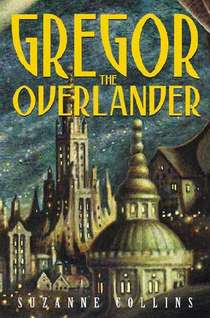
     Gregor and the sad mystery of his father's disappearance offer a quick hook right away and as soon as he and his sister Boots fall into the Underland, there was hope that his father might be there too. Suzanne Collins has a great way of telling a story and each chapter is a mini-cliffhanger. The intense scenes are full of danger and mystery but are succinct, which is ideal for a young audience. Collins doesn't shy away from a little bit of gore, but its minor and brief enough to appease the squeamish reader. The complex characters and unpredictable plot make it a compelling read that will hook even the most mature reader. I must admit, I enjoyed this book much more than I imagined I would.   

Textbook Assignment #5 - Evaluation Criteria

Characters - The story opens with Gregor anticipating a long, dreadful summer trapped inside his tiny apartment babysitting his little sister and his grandma. One fateful trip to the laundry room and Gregor and his sister Boots are swept away to a strange place, the Underland. There they meet an array of creatures ranging from the kind, loyal cockroaches, known as crawlers, to the conniving, murderous rats. Gregor is presented to the humans of Underland and quickly has to decide who he can trust. He meets Luxa, the future queen, and is unimpressed by her haughty behavior. Her grandparents, Vikus and Solovet, offer a wise, trustworthy presence to the young, scared Gregor. So much of the conflict revolves around the unique personalities and character traits of both the creatures and humans. The personification of the rats, bats, spiders and roaches complicates the plot and gives greater depth to the quest, where the humans and creatures must work in harmony for their shared survival.

Style - Having read other books by Collins, her style in this book was quickly apparent. An unlikely hero thrust into a terrifying situation in order to save himself and his family. Many similarities in style can be made to The Hunger Games, including many unusual characters with equally unusual names. The protagonist has been left to face reality without a father and has had to grow up quickly in order to help out a grieving mother. Once in the Underworld, Gregor is unsure of his abilities, yet has gained the support and trust of those around him. The inclusion of an innocent little sister mixed with gory descriptions of death and violence certainly seem to strike a familiar chord. 
     One element that is distinctive to Collins is her placement of rising action events at the ends of nearly every chapter, making it difficult for a reader to find a “good stopping point.” There are many plot twists in her writing that typically surprise the main character and the reader equally. Finally, the protagonist’s unlikely return home closes out the story with the reader knowing full well that life will never be the same again for any of the characters returning from this alternate world.
Teaching Guide
http://www.scholastic.com/teachers/lesson-plan/gregor-overlander-storia-teaching-guide

Teaching Books link
http://www.teachingbooks.net/tb.cgi?tid=2853


Good Masters, Sweet Ladies


Schlitz, L.A. (2007). Good Masters! Sweet Ladies! Boston, MA: Candlewick Press.

     The spirit of a medieval village comes alive through the monologues and dialogues of Good Masters, Sweet Ladies! This would be an ideal resource for a literature class studying the middle ages. Students could learn what kids their age may have faced as the son of a miller or the daughter of a shepherd. The short monologues would be easy for students to read, or even memorize, and would be an entertaining way to represent their understanding of the medieval England. Some of the stories were sad, like the girl who's family was so poor that her family tried to drown her as a baby. Other stories are humorous, like the two daughters debating the merits of their father's apprentice. Students will find it interesting to see the timeless issues, like bullying, loneliness, a first crush, and jealousy. 

Textbook Assignment #4

There’s a certain honesty and frankness to the world when told through the experiences of the youth. The fictitious voices of the medieval village belong to those between the ages of 10-15 and tell of life in the Middle Ages. Whether viewing life through the eyes of the lord’s daughter or the poor, starving runaway, the bleak reality of the 13th century is evidenced in their circumstances and concerns.  Each child’s story tells of their father’s trade in all its glory, its grievances, and sometimes it’s shame. With the collection of stories, the reader is allowed a complete view into the realities of medieval England. The author’s footnotes perfectly accompany each monologue with historical, factual and sometime humorous additions that assist the readers in their understanding of the life and culture of the Middle Ages. The lives of these young people intersect bringing a sense of connection and community, like the miller’s unpopular son and the friendless half-wit who seem to bond over a lack of companionship. Reading the account of the glassblower’s apprentice followed by the glassblower’s daughters is a comic reminder that teenage emotions and musings are timeless. While the monologues capture the voices of many characters, the setting is represented in Robert Byrd’s watercolor paintings of the town, the fields, and the people. Any classroom studying the Middle Ages would benefit from this series of poetic readings in its teachings of the life, the struggles, and the attitudes of medieval England.

Lesson Plans
http://www.candlewick.com/book_files/0763615781.btg.1.pdf

Teacher Guide
https://www.teachervision.com/middle-ages/printable/57928.html